What to Know Before Buying a Home in Stone Ridge, NY
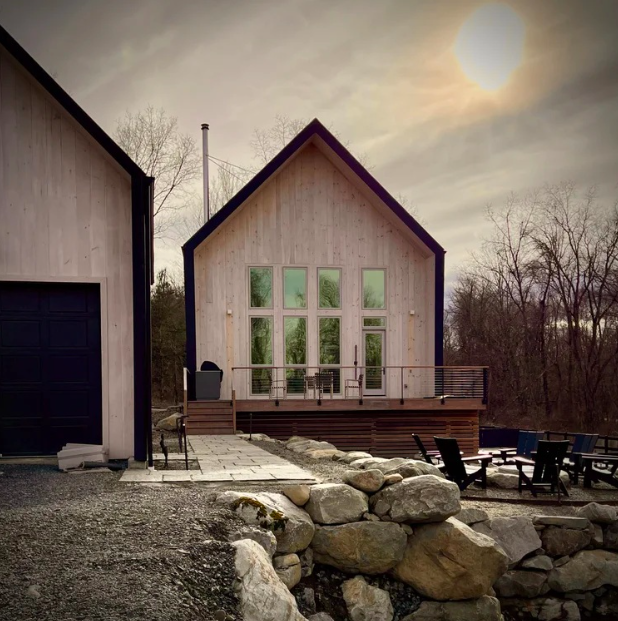
Stone Ridge does not announce itself. There is no grand gateway, no roadside banner, just a bend in Route 209 where the fields open up, and the first stone farmhouses appear, sitting low and solid against the Rondout Valley. If you are buying a home in Stone Ridge, NY, you are buying into a place that has changed remarkably little in two centuries, and that is precisely the point. Before you get to the offer stage, it helps to understand what makes this Ulster County hamlet tick, what the market actually looks like right now, and what questions to ask before you fall for a two-hundred-year-old farmhouse with a leaking root cellar.
A Hamlet Shaped by Stone and Story
Stone Ridge sits within the Town of Marbletown, a township that holds four nationally registered historic districts, an unusually high concentration for a place this small. The name is not a marketing flourish. Early Dutch and Huguenot settlers built with the fieldstone they cleared from their own pastures, and many of those original stone houses are still standing, still lived in, and still changing hands today.
Along Main Street, you will find rows of stone colonials with deep window reveals and central chimneys, evidence of construction methods that predate the Revolutionary War. Move off the main road and the architecture shifts to clapboard and Greek Revival farmhouses, the kind with wraparound porches, wide plank floors, and barns that have been converted into studios, garages, or guest quarters. What ties it all together is the setting: rolling agricultural land, mountain views to the west, and the Rondout Creek threading through it. Buyers drawn to Homes In The Wild's Hudson Valley listings often say the same thing about Stone Ridge, that the architecture and the landscape feel inseparable here in a way that is hard to find closer to the city.
It is worth noting that Stone Ridge sits at a genuine geographic crossroads. Depending on who you ask, it belongs to the Hudson Valley, the Rondout Valley, the Catskills, or the Shawangunks, and honestly, it belongs to all four. That overlap is part of the appeal. You get mountain recreation, valley farmland, and river access within a short drive, without committing to any one identity.
Who Is Buying in Stone Ridge and Why
The demographic picture here is unusual for a rural hamlet. Stone Ridge has a higher concentration of artists, designers, and creative professionals than roughly ninety percent of communities in the country, and that concentration shapes everything from the local gallery scene to the kind of renovations you see on older homes. Alongside that creative class sits a steady population of teachers, healthcare workers, and small business owners, giving the hamlet a workforce that is genuinely mixed rather than dominated by any single industry.
Remote work has reshaped the buyer pool considerably. A substantial share of residents now work from home, which means many buyers are no longer choosing Stone Ridge as a weekend retreat but as a full-time base, with a home office and a reliable internet connection ranking just as high on the wish list as an original hearth or exposed beams. At the same time, the hamlet still attracts plenty of second home buyers from New York City, drawn by a drive of roughly two hours and a lifestyle that feels genuinely different from anything downstate.
Neighborhoods and Pockets Worth Knowing
Stone Ridge is small, but it is not uniform, and the differences between its pockets matter when you are narrowing a search.
Main Street Historic District, where you will find the highest concentration of stone homes, walkable proximity to shops, the historic Stone Ridge Library, and the Ulster County Historical Society's Bevier House.
Leggett Road and the surrounding back lanes, where clusters of historic homes sit on larger parcels with pasture, barns, and long sightlines across the valley, ideal for buyers interested in horses or hobby farming.
The countryside toward High Falls, a neighboring hamlet with additional dining, shopping, and access to the old Delaware and Hudson Canal towpath, now part of the historic canal museum grounds.
Newer construction and updated farmhouses scattered along the county roads, appealing to buyers who want the Stone Ridge setting without taking on a full historic renovation.
Each of these pockets carries a slightly different price point and a different pace of life, so it pays to spend time in more than one before deciding where to focus your search.
What the Market Looks Like Right Now
Stone Ridge real estate remains competitive without being frantic. Home prices here rank among the higher end for the region, reflecting both the historic housing stock and the sustained demand from creative professionals and remote workers relocating from the city. Inventory tends to be thin for well-maintained stone homes in the historic district, while properties requiring more extensive renovation can sit longer and offer more room for negotiation.
Buyers should expect a market where well-priced, move-in-ready homes get real attention quickly, while raw or partially renovated stone houses reward patience and a good contractor relationship. Working with an agent who understands the difference between a house that needs cosmetic work and one that needs structural investment matters enormously here, given how much of the inventory predates modern building codes.
It also helps to think in terms of total project cost rather than purchase price alone. A stone farmhouse listed below the hamlet's median may still require a new roof, updated wiring, or a septic upgrade before it is truly livable, and factoring those costs in early avoids surprises during inspection. Buyers who budget for both the purchase and the restoration tend to end up happiest with their decision a year or two down the road, once the dust from moving in has settled and the house has had a chance to prove itself through a full Hudson Valley winter.
Local Life Beyond the Property Line
Part of what makes Stone Ridge worth the extra diligence is everything that surrounds the house itself. The Hortus Arboretum and Botanical Gardens offers guided tours covering edible landscaping, native plants, and vegetable gardening, a genuine resource for buyers who plan to put their own land to use. The Bevier House, home to the Ulster County Historical Society, anchors the hamlet's connection to its own past with exhibits and archives that many longtime residents draw on when researching their own property's history.
Weekends tend to revolve around a rhythm familiar to anyone who has spent time in a small Hudson Valley hamlet, a stop at a local farm stand, a walk along the Rondout, dinner at one of the handful of restaurants that have become neighborhood institutions rather than destinations. Stone Ridge does not try to be a nightlife town, and that restraint is exactly what its residents value most. For families, the Rondout Valley Central School District serves the hamlet, and the broader Marbletown community calendar includes seasonal events tied to the harvest, local history, and the arts, reflecting the same creative population that shapes the town's demographics.
Questions to Ask Before You Buy
Stone Ridge rewards buyers who do their homework before falling in love with a listing photo. A few questions consistently separate a smooth closing from a stressful one.
What does the local historic district review process require for exterior changes, and does this particular property fall within its boundaries?
Is the home on a private well and septic system, which is standard outside the hamlet center, and when were they last inspected or upgraded?
What is the realistic commute time to Kingston, New Paltz, and the Thruway entrance, since daily driving patterns vary more than the map distance suggests?
How was the home insulated and heated originally, and what has been updated, since many stone and timber frame houses need supplemental insulation to perform well through a Hudson Valley winter?
Are there any easements, shared driveways, or agricultural exemptions attached to the parcel, particularly on properties with adjoining farmland?
None of these questions should scare a serious buyer away. They simply reflect the reality of buying an older home in a historic hamlet, where the character that makes a property special is often the same character that requires a bit more diligence up front.
Renovating With Craft in Mind
Many buyers come to Stone Ridge specifically because they want to take on a renovation, and the hamlet's concentration of artists and designers has, over time, built up a genuinely strong bench of local craftsmen who specialize in exactly this kind of work. Stone masons who understand traditional pointing techniques, timber framers who can repair rather than replace an original beam, and contractors experienced with sympathetic additions to a two-hundred-year-old footprint are all more accessible here than in most rural markets, precisely because the demand for that expertise has existed for decades.
That said, buyers should still budget conservatively and build in extra time. Stone construction moves differently than modern framing, and even straightforward projects, a new bathroom, an updated kitchen, tend to reveal surprises once walls come open in a home this old. Working with an agent and a contractor who have handled Stone Ridge stone homes before, rather than a crew unfamiliar with the material, tends to make the difference between a smooth renovation and a stressful one.
Buying a Home in Stone Ridge, NY, Comes Down to Character
Buying a home in Stone Ridge, NY means buying into craftsmanship, into a landscape that has shaped its architecture for three centuries, and into a community that has managed to stay genuinely local even as interest in the region grows. It is not the easiest market to shop quickly, and it is not meant to be. The reward for patience is a home with real history, real materials, and a setting that still feels like the Hudson Valley of a much earlier era.
Find Your Stone Ridge Home With Homes In The Wild
Homes In The Wild specializes in exactly this kind of property: the stone farmhouse with three centuries of history, the barn conversion with a view of the ridge, the countryside compound that needs a buyer who understands what they are taking on. Led by Angelica VonDrak, a designer and associate real estate broker affiliated with Houlihan Lawrence, the team brings a design-forward, detail-oriented approach to buying and selling across the Hudson Valley, the Catskills, and Western Connecticut. Whether you are searching for a historic stone home in Stone Ridge or evaluating a full renovation, Homes In The Wild can guide the search, connect you with trusted local contractors and craftsmen, and help you move forward with confidence. Reach out to start your Stone Ridge search today.
Frequently Asked Questions
What is the average home price in Stone Ridge, NY?
Pricing varies significantly by age, acreage, and condition. Historic stone homes in move-in condition tend to command a premium, while properties needing renovation can offer more room to negotiate. Current listings and recent sales are the most reliable guide, since the market shifts from season to season.
Is Stone Ridge a good place to raise a family?
Many families are drawn to Stone Ridge for its quiet pace, strong sense of community, and access to outdoor space, along with the local schools serving the Rondout Valley Central School District. The hamlet's mix of creative professionals and longtime residents also gives it a welcoming, low-key character.
How far is Stone Ridge from New York City?
Stone Ridge is roughly a two-hour drive from New York City, making it a realistic option for both full-time residents and weekenders who want genuine distance from the city without an extreme commute.
What towns border Stone Ridge?
Stone Ridge sits within the Town of Marbletown and neighbors High Falls, Kingston, and New Paltz, all within a short drive and offering additional shopping, dining, and services.
Are there restrictions on renovating a historic home in Stone Ridge?
Homes within the Main Street Historic District and other registered historic areas may require review before certain exterior changes. It is worth confirming a property's historic district status early in the buying process so renovation plans can be scoped accordingly, and connecting with local craftsmen who have experience working within those guidelines can make the approval process considerably smoother.
Should I get a specialized inspection for a stone home?
Yes. A standard home inspection does not always account for the specific issues common to stone and timber frame construction, including moisture management, pointing condition, and structural settling. Buyers are well served by hiring an inspector with direct experience evaluating historic Hudson Valley stone homes before finalizing an offer.